Color Choices in Slot Interfaces Reflect Regional Payment Habits in Browser Sessions
Uma Braun · Nov 14, 2026
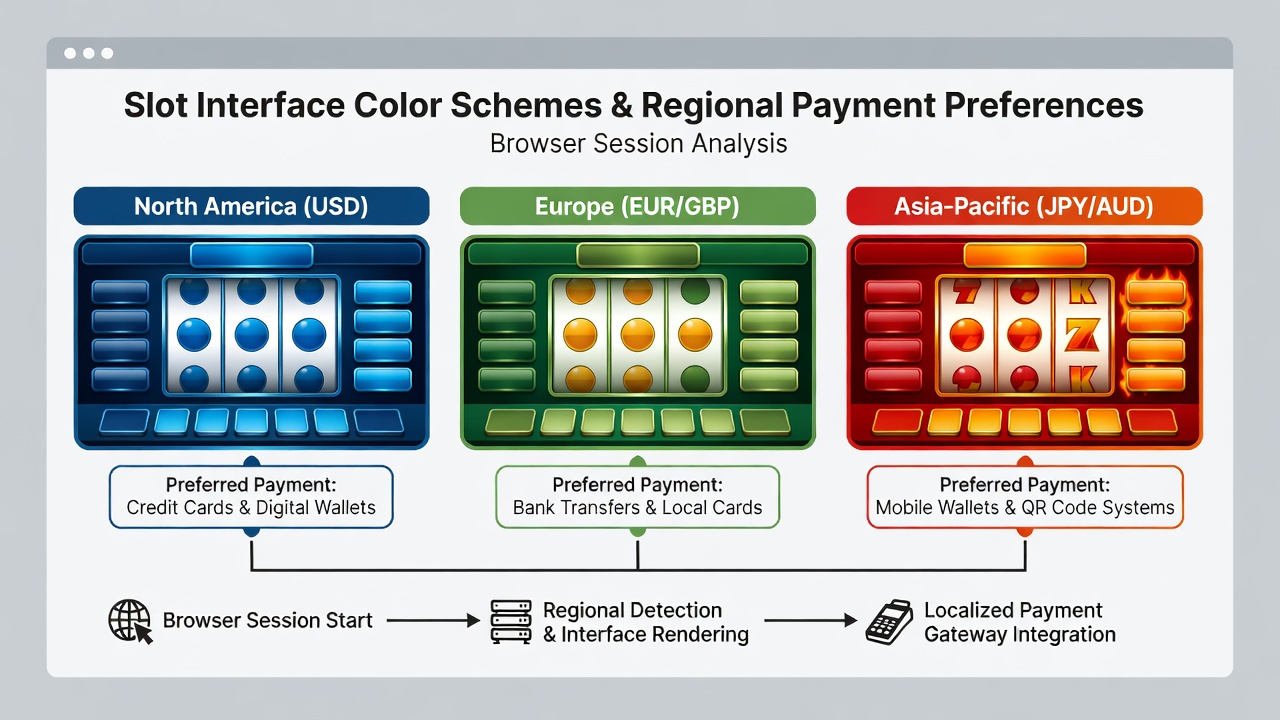
Color Choices in Slot Interfaces Reflect Regional Payment Habits in Browser Sessions
Slot interface designers adjust color palettes based on observed patterns in how users select payment methods during browser sessions, and data from multiple markets shows consistent correlations between hue preferences and transaction types. In regions where credit card usage dominates, interfaces often incorporate deep blues and silvers that align with branding from major card networks, whereas areas favoring digital wallets tend toward brighter greens and oranges that echo app icons for those services. Observers note these adjustments occur through iterative testing rather than arbitrary decisions, and platform operators track click-through rates alongside payment completion metrics to refine the visuals over time.
Regional Variations in Color and Payment Alignment
European markets demonstrate one clear pattern where interfaces using muted earth tones see higher engagement with bank transfer options, according to figures released by the European Gaming and Betting Association in late 2025. Those same tones appear less frequently in sessions originating from North America, where operators instead favor crisp whites paired with accents of navy to support credit card and debit card flows. Australian platforms, meanwhile, lean into warm sunset gradients that correspond with preferences for local digital payment rails, and researchers at the University of Sydney’s gambling studies unit have documented these shifts through anonymized session logs collected across multiple operators. November 2026 reports from the same academic group are expected to expand the dataset to include mobile browser data collected during the prior twelve months.
Asian markets present additional contrasts, with interfaces in Singapore and Japan often employing high-contrast reds and golds that track alongside preferences for stored-value cards and e-money systems. These color choices appear in A/B tests where conversion rates for those specific payment methods rise when the palette matches culturally familiar branding cues. Data indicates the effect holds across desktop browsers but weakens slightly on tablets, suggesting screen size influences how users perceive the visual cues.
Browser Session Tracking and Design Adjustments
Platform teams monitor browser session data in real time to identify when users pause during payment selection, and color changes serve as one variable among several that operators test to reduce friction. One study conducted by the Canadian Centre for Gaming Research tracked over 200,000 sessions and found that swapping a neutral gray background for a regionally preferred accent color increased completion rates for preferred local payment methods by measurable margins. The same report noted that these adjustments require ongoing calibration because user expectations shift when new payment providers enter the market.
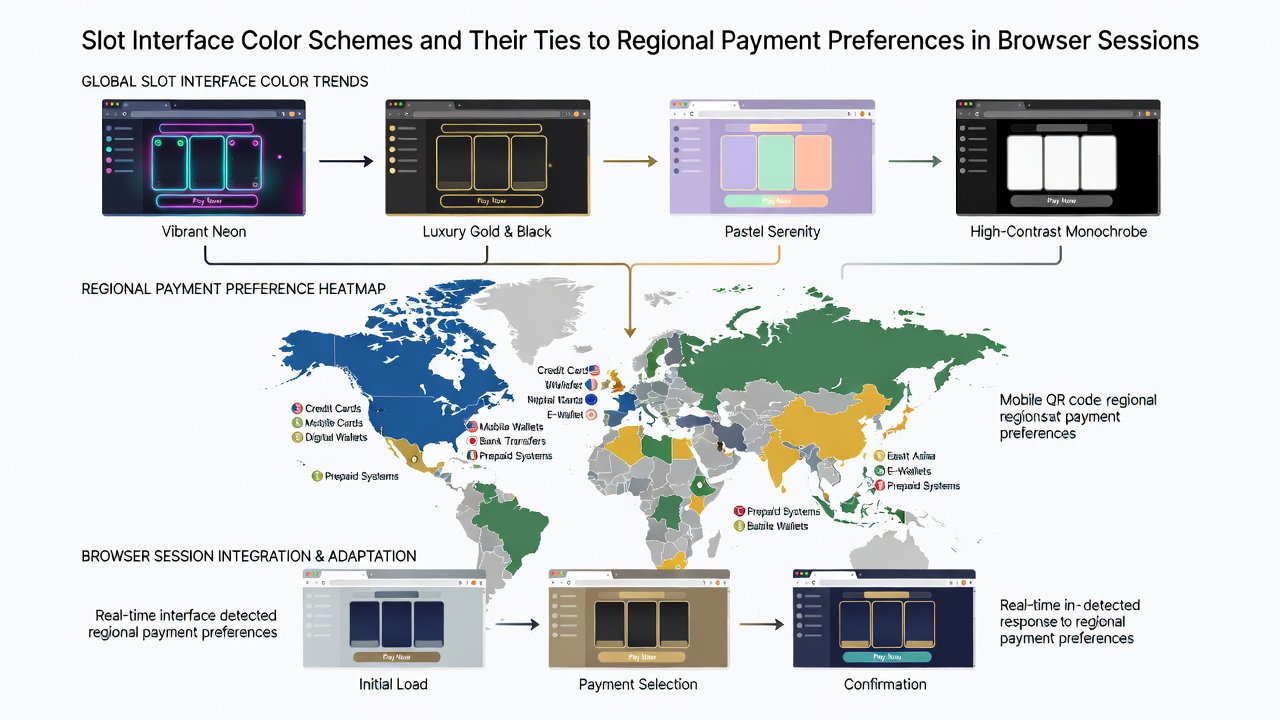
Designers also consider how color interacts with other interface elements such as button placement and animation speed. In sessions where users favor cryptocurrency options, interfaces frequently adopt darker themes with neon highlights that mirror the aesthetic of digital asset platforms. Those darker palettes show lower engagement in regions where traditional banking methods remain dominant, prompting operators to maintain separate regional templates rather than a single global design.
Data Sources Informing the Patterns
Industry reports from the Nevada Gaming Control Board and the Australasian Gaming Council provide additional context on how payment preferences evolve alongside interface updates. Both organizations compile aggregated transaction data that designers cross-reference with color usage statistics gathered from browser telemetry. The resulting insights guide decisions about when to refresh palettes without disrupting existing user flows. One analysis released in 2026 highlighted that minor hue adjustments produced more stable retention than wholesale redesigns, particularly when operators introduced new regional payment partners.
Conclusion
Slot interface color schemes continue to evolve in response to documented regional payment preferences observed in browser sessions, and the connections appear through repeated analysis of session-level data across markets. Operators rely on these patterns to maintain compatibility between visual design and transaction options, while academic and regulatory sources supply the figures that support ongoing refinements. As payment methods diversify, the relationship between color and regional habits is likely to remain a focus for interface development teams.